Feeling blah
This week I've been feeling a bit flat and unmotivated. Please don't be disappointed that a coach can feel this way - we're still human!
Is it an inevitable slump after the energy that a new year brings? Or maybe it's that the mornings are suddenly getting darker (here in Sydney anyway). To be honest, it could be 100 things.
But we all have these feelings occasionally right?
We can't always choose how we feel but we can choose how we respond. I can tell you what I'm not doing - I'm not beating myself up. Or choosing this week to climb some incredibly challenging mountain.
What I am doing is being kind to myself and reflecting on how I can 'fill my cup'. For me that's a dip in the ocean tomorrow. And leaving the mobile phone at home when I do.
What do you do when you're feeling blah?

Start on the inside
With international women’s day this week, you’ll be inundated with messages around women’s empowerment, so I’ll keep it brief.
As a coach, what I know for sure, is that women are often hyper critical when it comes to judging themselves. Everything changes when you flip that narrative.
Start on the inside and you’ll begin to come into your power.

Finding your why
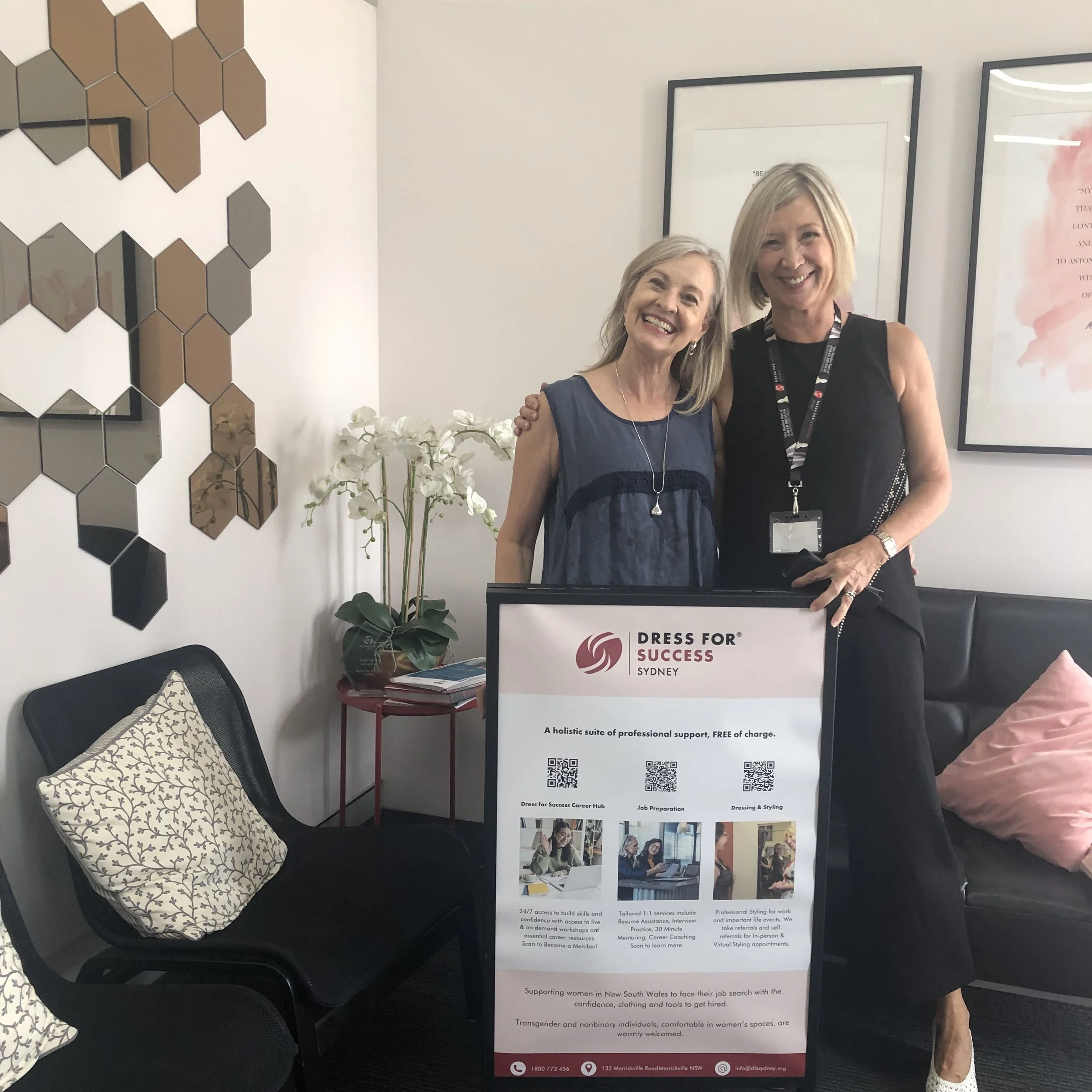
Today I volunteered at Dress for Success Sydney. I try and go every couple of weeks and it brings me such joy. I love the clients, the volunteers and team leaders, the clothers and styling work and of course the permanent team – I’m pictured here with the divine Julie Stocca whose warmth, enthusiasm and positive energy absolutely make my day every time I walk in the door.
I feel like they’re my people. My tribe. Where’s yours?
I know life is busy and of course not everyone has the option of taking time out of work. And it can be tricky finding time after hours.
But here’s the thing – giving back will give to you. Your life will improve. People who volunteer are happier. Purpose makes you live longer. Your life could be immeasurably richer. Research backs this up although I’m hoping you’ll take my word for it.
For me there is one caveat though – you should enjoy it.
Find something you care about and do something you love. Whether that’s bush regeneration, coaching the kids soccer team, volunteering abroad or being on a board. When it comes to volunteering, no one wants a martyr. They want you if you want to be there.
Can I ask…how much are you being paid?
I love a conversation that makes me question what I believe - and I just had one.
I have a female mentee starting her career. She’s driven, talented, intelligent. She wanted my guidance – she’d asked a colleague what she was paid. She perceived a little frostiness in the response. Did she do the wrong thing?
With a confident “yes…it was the wrong thing to do” I proceeded to share my views on overstepping boundaries, good manners, professionalism and the rest.
With complete logic and honesty, she responded “but how am I supposed to know if I’m being paid fairly, unless I ask?”
And I stopped.
How often in my career was I paid less because I didn’t know I deserved more? This culture of secrecy around salary is interesting right?
And the law is catching up – I just saw that from June 2023 Pay Secrecy Clauses can’t be included in employment contracts or other written agreements in Australia.
This could get very interesting, very fast.
I wonder how long before the inherent culture of non-transparency changes though – and what will happen when it does? It’s something to think about.

The stuff we don’t talk about
The other day I was chatting to someone about awareness of menopause at work. And I think it’s great that more organisations are talking about a topic that has been taboo for too long.
But there are so many other things we often don’t talk about at work – loneliness, bullying, prostate problems, exclusion, menstruation, miscarriage, IBS, overwhelm, bereavement, domestic abuse, anxiety and so many more. They all can impact work performance and engagement.
I’m wondering why people can feel more comfortable raising these topics in a coaching session but not in a conversation at work. Or with their leader.
Maybe they don’t believe they’ll still be valued. Maybe they’re worried they’ll go in the ‘too hard basket’ or their reputation as a superstar will be tarnished.
I think it depends on how much you trust the person you’re telling. It all comes down to the relationship. And it can be hard to build those real relationships in a hybrid world. It requires sustained and intentional effort to build authentic and strong work relationships. I’m not seeing a lot of that effort right now. A weekly WIP just isn’t going to cut it.
So…would you tell your leader that you’re struggling because your beloved dog (or cat) has passed? Or would you make up another excuse? And does it really matter anyway?

Yikes!
This is my first video for Linkedin and I’m way out of my comfort zone. I recorded 5 different versions. I agonised over whether I should post it. I know that I will probably look back on it in a year (when I’m more accomplished) and cringe. So why do it?
I’m walking the talk.
As a coach, I actively encourage my clients to lean into discomfort so they can grow. Sometimes they need a gentle (or not so gentle) nudge. Sometimes they borrow the confidence that I have in them.
I’ve also made this video without my usual ‘armour’ of makeup and corporate clothes. That felt uncomfortable too. Sometimes it’s being authentic or vulnerable or exposing yourself that feels like a risk.
Risks are sometimes worth taking though. Life would be a little too safe without them.
I don’t think I really got it…
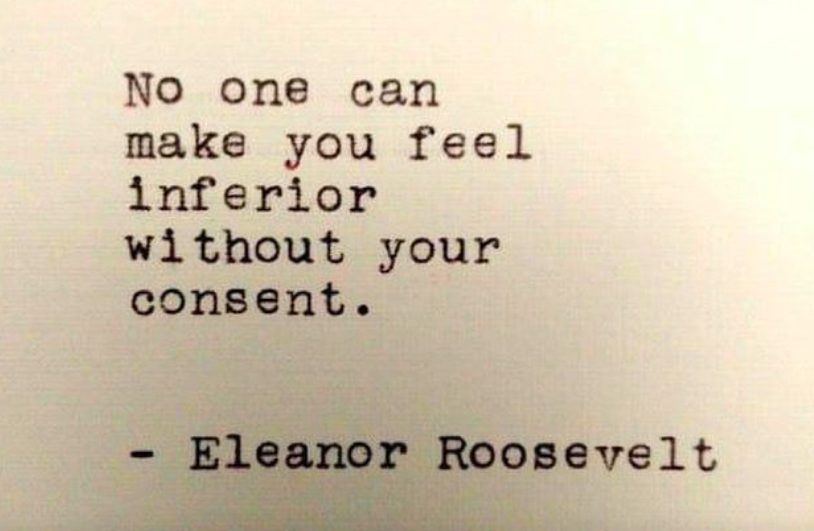
I know, I know – like me, you’ve probably seen this quote a thousand times. But yesterday whilst I was listening to a podcast, for the first time, I really got it.
That you can be told that you that you are incapable or worthless or flawed or boring (or whatever) and you have a choice. Do I believe this? Is it true for me? Do I consent to seeing myself this way?
What’s interesting for me as a career and leadership coach, is that often the person telling you that you are inferior is you. It’s your own internal narrative spinning this story. These narratives are often screaming at us just when we need them to be quiet – when taking on a new challenge or navigating career change, or looking for a new role. Times when we need our confidence and optimism. You need to really challenge that narrative. Just because you think it, it doesn’t make it true.