What do you (really) want?

I’ve been asking myself this question a lot lately. For me it’s framed as “what is it going to take for the next 20 years to be the best 20 years of your life?”. What does that look like?

It’s surprising how rarely we stop and think about this. It’s at the heart of any good coaching conversation – and yet it can take a while to really surface.

What gets in the way is interesting.

We answer with what we think we’re worth. Or what we deserve. Or what feels realistic. Sometimes we answer with what others expect of us. Sometimes the answer is just… smaller than it could be.

I can usually tell when it’s not quite right. There’s no real energy in it. It feels a bit safe. A bit contained. And often, I know there’s more there.

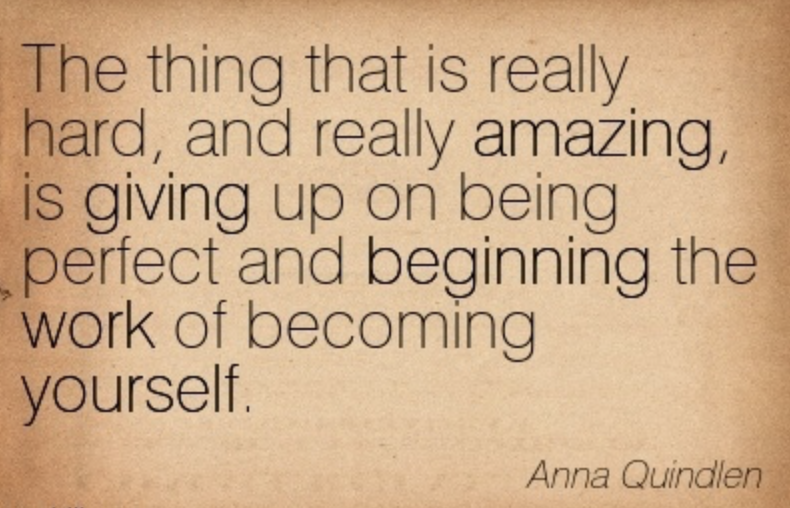
There is tremendous power in knowing what you really want. Figure it out and honestly - you’re halfway there.  


If you’re interested in coaching or workshops for yourself or your team, feel free to get in touch at tess@nextcoaching.com.au

Let me tell you something...

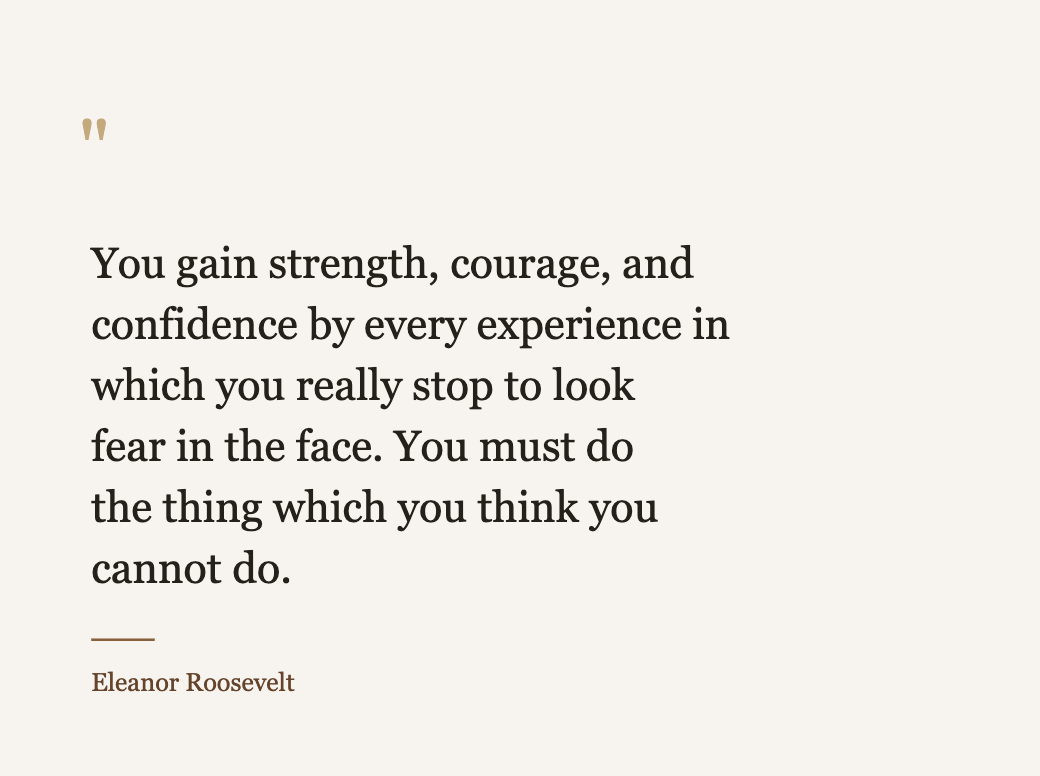
I’ll tell you a secret – when faced with almost anything new or unfamiliar, I’m usually wrestling with fear. I’m not using the word “wrestling” lightly – we have a bit of a tussle, my fear and I, but (and I’m proud of this) I don’t give in without a good fight. And I usually win.

I know I’m not alone and many of us feel this way.

This wonderful quote from Anais Nin says it so much more eloquently than I can. When I can manage (if not completely conquer) my fear and say a big, confident YES (or even a small, timid yes) to new opportunities then all kinds of great things happen. I learn new stuff, or make friends, or get new job offers. I get wiser. I eventually get comfortable doing the stuff that was so scary and my confidence grows. It changes the way I see myself. It changes the way others see me. My life gets bigger. And much more interesting.

It’s not always comfortable – actually, usually it’s super uncomfortable. But I don’t want a comfortable life – what about you?

If you’re interested in coaching or workshops for yourself or your team, feel free to get in touch at tess@nextcoaching.com.au

#professionalcoaching #careermanagement #futureofwork #leadershipdevelopment #findingyourwhy #careertransition

Survival of the friendliest

For a long time, we’ve told ourselves that careers are built by being the smartest, toughest or most impressive person in the room (thanks Darwin!).

But there’s a different idea gaining traction. The “survival of the friendliest”.

The premise is simple. In social systems, those who thrive are often the people who are good at cooperation, trust, emotional regulation and connection. Friendliness is a survival advantage.

I see this play out constantly in organisations.

Opportunities, referrals, promotions and influence rarely come from competence alone. They tend to flow toward people who:

• are easy to work with

• generous with their knowledge

• trustworthy and trust

• practice reciprocity

• are good in conversation

• can collaborate rather than compete

Skills in conversation, connection and building community will supercharge leadership skills, team dynamics and organisational effectiveness. And for career management and personal brand, success depends as much on how we relate as what we know. Being ‘friendly’ isn’t soft – it’s strategic.

And it starts in everyday conversations.

PS For more information see: 

The Survival of the Friendliest (2019) by evolutionary biologist Brian Hare and Vanessa Woods

https://www.amazon.com.au/Survival-Friendliest-Understanding-Rediscovering-Humanity/dp/0399590684

‘It’s only by saying no that you can concentrate on the things that are really important.” Steve Jobs

Something has shifted and I’ve got to say, I’m liking it. I’ve been saying 'no' so much more than I used to. 


And like everything I practice. I’m getting better. I’m saying no to business opportunities that just don’t feel right, no to the tempting (but relentless) training opportunities, no to an overfull diary, no to full weekends. 


I said no to New Year’s Eve. Thank you, that’s kind but…no. Just not my thing – not this year anyway. I was in bed by 10 with a decaf. Bliss!


Of course, sometimes there is an obligation or responsibility. Like everyone, there are parts of my job that I endure, rather than relish. I’m not going to miss a dear friend’s birthday because I’d rather watch Bridgerton. And there can be empathy and kindness in the message even if it is a no.


But in a world where we are bombarded with demands for our time and attention, the ability to say no is more important than ever before. It’s about having boundaries – does everyone else determine how you live your life, or do you get to choose? Saying 'yes' to you often means saying 'no' to something or someone else.


It’s always an interesting topic for a coaching conversation. Saying no can take a lot more courage than yes. No to a new role that’s just not right. Or an unnecessary meeting. Or a promotion that may seem like a win but feels like a loss. 


It can be tempting to grasp everything that comes our way but ultimately what you say ‘no’ to is as big a determinant of your future, as what you say ‘yes’ to. In life and work.


What do you say no to?

Photo by James Orr on Unsplash

Lack of boundaries invites lack of respect.

This week I’ve had a few coaching conversations about work life boundaries.

The most successful people I work with are not the ones working the longest hours. They’re the ones with clear boundaries. They do excellent work. And they leave space for recovery, relationships and a rich, full life.

Poor boundaries look little different for everyone to be honest. But they’re often signalled by some resentment or a lack of self-care. I think they look like regularly checking work emails when you're on holiday. Or responding to an email at 9.30pm. They look like getting a head start on your work week on a Sunday afternoon. Or working when you're on sick leave.


I can absolutely get some pushback from clients on this one. 

Some people believe their job simply cannot be done in normal hours.

Some wear “hard worker” as an identity.

Some are quietly driven by imposter syndrome.

And yes, some leaders role model terrible boundaries.

But here’s the truth. Your organisation will not set your boundaries and your leader may not either. You have to draw the (boundary) line - they may not like it but that's okay because it's not your job to make everyone happy.

Your job is to demonstrate that you can do your role well and maintain your boundaries. If your organisation (or leader) has no respect for that, there is most certainly a problem.

A quote that resonates for me is "the people most upset when you enforce your boundaries are the ones who benefitted from you having none".

What’s your experience?

When the ground is shifting

Whilst Mark Carney was talking about the global economic and geopolitical landscape, I see this same dynamic showing up every day in careers and organisations.

So many people are still waiting for things to settle and for work to feel more familiar again. Or for old rules to start working.

But this is not something to just wait out – it's more permanent than that. A whole new era. And that means doing things very differently.

In careers, it means letting go of the idea that a qualification, a role, or even hard work alone will keep us safe. You need to do more.

In organisations, it means developing leaders who can think clearly, relate well, and make sound decisions when the ground is shifting.

Nostalgia may be tempting. But it won’t do the work that really needs to be done.

One sign. Ten reminders. Still true.

I came across this sign on the side of a building while travelling in Japan with my family in 2017.


I was mooching around, turned a corner, and there it was. Unexpected, quirky, wise. Very Japan.


As we head into a new year – and navigate work in the age of AI – this feels more relevant than ever.


You don’t need all ten. Even one can shift how you work and think.


For me it’s #1: Do one thing at a time.


Which one stands out for you?

What we can all learn from Taylor (even if you're not a fan)

Last weekend, like millions of people, I listened to Taylor Swift’s new album Diary of a Showgirl — and loved it!


Whilst I’m not a superfan, I’m in awe of this woman who attracts a following so diverse it encompasses me as well as my twenty-something daughters. How does she do it? After all, plenty of people are as talented as she is, yet they haven’t achieved the phenomenal, cross-generational, record-breaking success that she has.


Because her fans aren’t just buying Taylor’s music — they’ve bought into her brand. Her fans feel like they really know her; there’s an authenticity there. There’s also a reciprocity — they feel like she loves them back. Her hard work and talent are part of her brand, but it’s more than that. It’s not just what she does, it’s who she is. Even the more gnarly parts of her character help her fans feel like they really know her. To be honest, I kind of like the darker, “spicy” Taylor — the one with a tendency to seek vengeance, retaliate and snap.


So — what does this have to do with you? You have a brand too. Just like Taylor’s, it encompasses both what you do and who you are.


Many of my clients roll their eyes (figuratively if not literally) when I start talking about personal brand, because they think of it as opportunistic or shallow. This couldn’t be further from the truth. Having a strong, resonant brand is about knowing who you truly are — what you’re good at, what you stand for, what you offer, and where you’re going.


And then making sure others know that about you too.


So, if Taylor’s brand is authenticity, creativity and connection — what’s yours?